Skip to content
Emergencies accommodatedFree parking

Resources

Tips and resources for your oral health.

Answers to common questions — care after your visits, children's hygiene, and everyday habits. A reference to keep close.

After your care

After a tooth extraction

To speed up healing, follow the recommendations below. Some discomfort and lower-face swelling are completely normal.

Day of surgery — keep the gauze in your mouth for an hour or two, with firm pressure; replace it every half hour as needed. Keep your head upright. Apply a cold compress to your cheek at regular intervals (20 minutes per hour). If bleeding, bite on gauze or a lightly damp tea bag for about twenty minutes. Limit physical exertion.

Avoid: removing the blood clot (it helps healing); eating before the bleeding stops; using a straw; rinsing or spitting; smoking or alcohol; hard foods; brushing near the extraction site during the first 72 hours.

Suggested diet — the day of surgery, eat only soft foods and lukewarm drinks. Resume normal eating once you feel better.

Day after to full recovery — rinse three times a day with warm salt water (1/2 tsp salt in 250 ml water). Brush and floss daily, avoiding the extraction site during the first 72 hours. Avoid hard foods.

Some words may be harder to pronounce for less than a week, and saliva may be more abundant. Bruising can appear on the face and will fade in five to seven days. Some people find it hard to open their mouth fully for up to five days. If pain worsens after three days, call us. For heavy bleeding, prolonged swelling, or medication reactions, contact us right away.

After minor oral surgery

To speed up healing, follow the recommendations below. Some discomfort and lower-face swelling are normal after the procedure.

Day of surgery — keep the gauze in your mouth for an hour or two with firm pressure; replace every 20–30 minutes as needed. Apply ice to your cheek (20 minutes per hour). If bleeding, bite on gauze or a lightly damp tea bag for about twenty minutes.

Avoid: rinsing or spitting, drinking with a straw, smoking, hot food or drinks, and intense activity.

Pain — for the first 24 to 72 hours, take acetaminophen or ibuprofen, but avoid aspirin.

Starting the day after, rinse three times a day with warm salt water. Bruising can appear and will fade in five to seven days. You may also find it harder to open your mouth fully; this resolves in four to five days. If pain worsens after three days, call us. For heavy bleeding, prolonged swelling, or medication reactions, contact us right away.
Cold pack on a towel, a glass of water and a bowl of yogurt on a bedside table (illustrative image)

For children

The first visit to the dentist

Ideally, a child's first dental visit happens around age one — about six months after the first tooth appears.

At that first appointment, the dentist and hygienist build trust with the child and do a basic exam and cleaning. They'll also walk you through brushing and flossing technique.

Around half of all patients dread dental visits. To avoid passing that anxiety on, stay positive. Prepare your child by explaining what will happen at the first appointment. Your collaboration matters before, during, and after the visit.

Plenty of children's books address the first dental visit. We suggest reading one a few days before the appointment to reassure your child. The night before, summarize the steps. Never promise the child they'll feel no discomfort.

We sometimes ask the accompanying adult to sit in the chair and hold the child during the exam. With older children, we may ask you to return to the waiting room once the initial connection is made. Get into the habit of booking every six months.

Make sure your child brushes at least twice a day. Don't skip flossing before bed. Lean toward low-acid, non-sticky, low-sugar foods. Until age 10, supervise the evening brushing.

Oral hygiene for babies (under 2)

The primary dentition is fully formed at birth — baby teeth are simply hidden under the gums.

Generally, baby teeth start coming in around six months and finish erupting by about age three. Healthy teeth begin with healthy gums — which is why parents should follow basic oral-hygiene routines with their baby.

From birth to about six months, gently wipe your baby's gums with a clean, damp cloth after each feeding. This removes the sticky film (plaque) that can damage teeth.

Once teeth start to come in, clean them with a soft-bristled brush. The amount of toothpaste should be no larger than a grain of rice. It's not easy, but try to have your baby spit afterward.

The first dental visit should happen about six months after the first tooth appears, or around the first birthday. Subsequent visits are scheduled every six months, or as recommended by your dentist.

Fluoride: a true shield

Fluoride prevents cavities and can even reverse early decay. Naturally present in soil, water, and food, it strengthens tooth enamel.

In Quebec, very few drinking-water systems are fluoridated. Fluoride toothpaste is therefore the main everyday protection; depending on your child's risk of cavities, your dentist may also recommend a fluoride varnish or other options.

If supplementation is needed, your dentist can recommend options: fluoride toothpaste, mouthwash, or gel. With fluoride toothpaste, follow age-appropriate amounts: under three, no larger than a grain of rice; ages 3 to 6, no larger than a pea.

As with anything, moderation matters. A fluoride overdose in children can cause dental fluorosis — visible as small whitish spots on teeth. A professional opinion is always wise before changing routines.

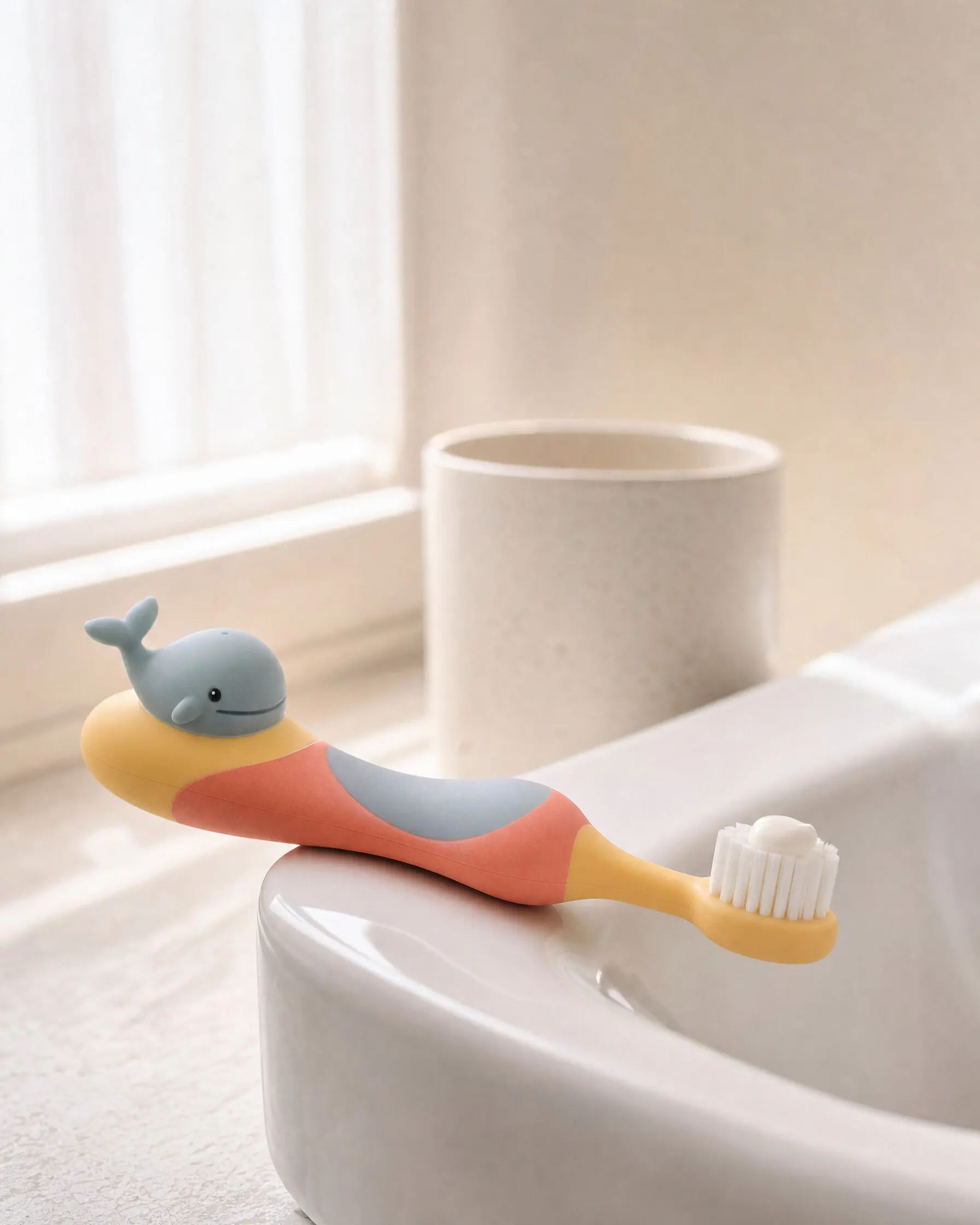
Colourful child's toothbrush with a little whale, resting on the edge of the sink (illustrative image)

Everyday tips

Choosing the right toothbrush, toothpaste, and mouthwash

Brushing and flossing regularly is essential — but using the right gear matters just as much.

Toothbrush — most of the time, we recommend soft bristles. Patients with sensitive teeth get extra-soft; those with tougher gums can use firmer bristles. Synthetic bristles are gentler and more hygienic than natural ones (which tend to be too hard).

The head should be relatively small and ideally rounded to reach every tooth surface. The handle should be comfortable to grip. If unsure, your dentist can recommend the right type.

Electric brushes are increasingly popular. Go with a rotary round head or a classic head with sonic sweep. Manual brushes and electric heads should be replaced every three months.

Toothpaste — first rule: pick a flavour you like (otherwise consistency drops). Most toothpastes share the same key ingredients in similar proportions — including fluoride, which fights decay. Variants like “fights cavities” or “strengthens enamel” essentially say the same thing.

For children, make sure they don't swallow toothpaste. Antibacterial toothpastes suit patients prone to gingivitis; sensitivity toothpastes contain desensitizing agents that take effect after a few days of daily use.

“Whitening” toothpastes restore the tooth's natural colour and remove certain stains (wine, coffee, cigarettes). They don't match a professional whitening treatment. Before any whitening, consult your dentist — some patients (pregnant or nursing, immunocompromised, with acid reflux) should avoid it.

Mouthwash — an antimicrobial mouthwash reduces bacteria, but doesn't replace brushing. Choose alcohol-free (alcohol dries the mouth, which can cause bad breath). Look for a brand with a recognized dental-association seal.

Sensitive teeth

Tooth sensitivity isn't something to live with — and it's treatable.

Dentin sensitivity is the discomfort felt when teeth touch hot or cold foods. It comes from gum recession or loss around the tooth, or from enamel erosion. In each case, exposed dentin is what makes the tooth sensitive.

Other causes include cavities, gum disease, a faulty restoration, or even a sinus or ear infection. Contrary to a common belief, teeth don't grow more sensitive with age. Sensitivity is tied to diet and hygiene habits and can appear at any age — a too-vigorous brushing technique or a citrus-heavy diet can be enough to set it off in a young adult.

Prevention — keep up good oral hygiene. Use a soft-bristled brush and consider a sensitivity toothpaste. During your twice-daily brushing, don't scrub too hard; floss gently along the tooth-gum line.

Eat a balanced diet and limit very sugary or acidic foods. Excessive daytime clenching or nighttime grinding can increase sensitivity — discuss it with your dentist to find solutions.

If pain persists, ask us — we'll guide you to the right fix for your situation. Painful teeth aren't normal.

Tips for patients with diabetes

People with diabetes are more susceptible to infections — their oral hygiene deserves particular attention.

Why diabetes increases gum-disease vulnerability — people with diabetes produce less collagen in their gums. Since collagen drives tissue repair, the gums become more exposed to damage.

Diabetes also causes inflammation of blood vessels. Reduced blood flow to gum vessels limits nutrient delivery and slows healing.

When blood sugar is poorly controlled, oral fluids contain more glucose, which fuels other organisms like fungi.

People with diabetes have a harder time fighting bacterial plaque. As plaque builds up, it calcifies into tartar. Gums become more vulnerable to gingivitis — symptoms: red, swollen gums, hypersensitivity, or bleeding when brushing. Untreated gingivitis can progress to periodontitis, a more serious infection that attacks the bone supporting the teeth.

The best way to prevent periodontal disease is to keep your diabetes in balance: well-controlled blood sugar produces gum tissue that behaves nearly like a non-diabetic patient's. Combine that with impeccable oral hygiene (brushing after meals, systematic flossing), regular dental visits, and reporting any health change.

It's a feedback loop: poorly controlled blood sugar can worsen periodontal disease, which in turn can hurt diabetes. Three priorities: blood-sugar control, proper oral hygiene, vigilance.

Healthy teeth and gums

We're taught early to brush our teeth — but what about gums? Healthy gums are pink, firm, and don't bleed.

Gums are soft tissue covering the jawbone. They act as the protective base for teeth: by covering the roots, they shield them from microbes.

Tips for healthy gums: brush gently with a soft-bristled brush, including the gum line (brush vertically, from gum to tooth). Carefully clean molars and premolars. Check your gums once a week for any change in colour or texture. Floss daily to remove particles between teeth. Favour fruits and vegetables; avoid acidic and overly sugary foods. Avoid tobacco.

Many people skip flossing because of the bleeding and pain that follow. But that bleeding comes from the microbes in plaque — stopping makes things worse. Stick with the habit; if pain or bleeding persists after two weeks, see a dentist.

See your dentist regularly for cleaning and periodic exams. Gum disease shows no early symptoms but can progress to attack the bone supporting the teeth. To avoid complications and possible extraction, take a preventive approach.

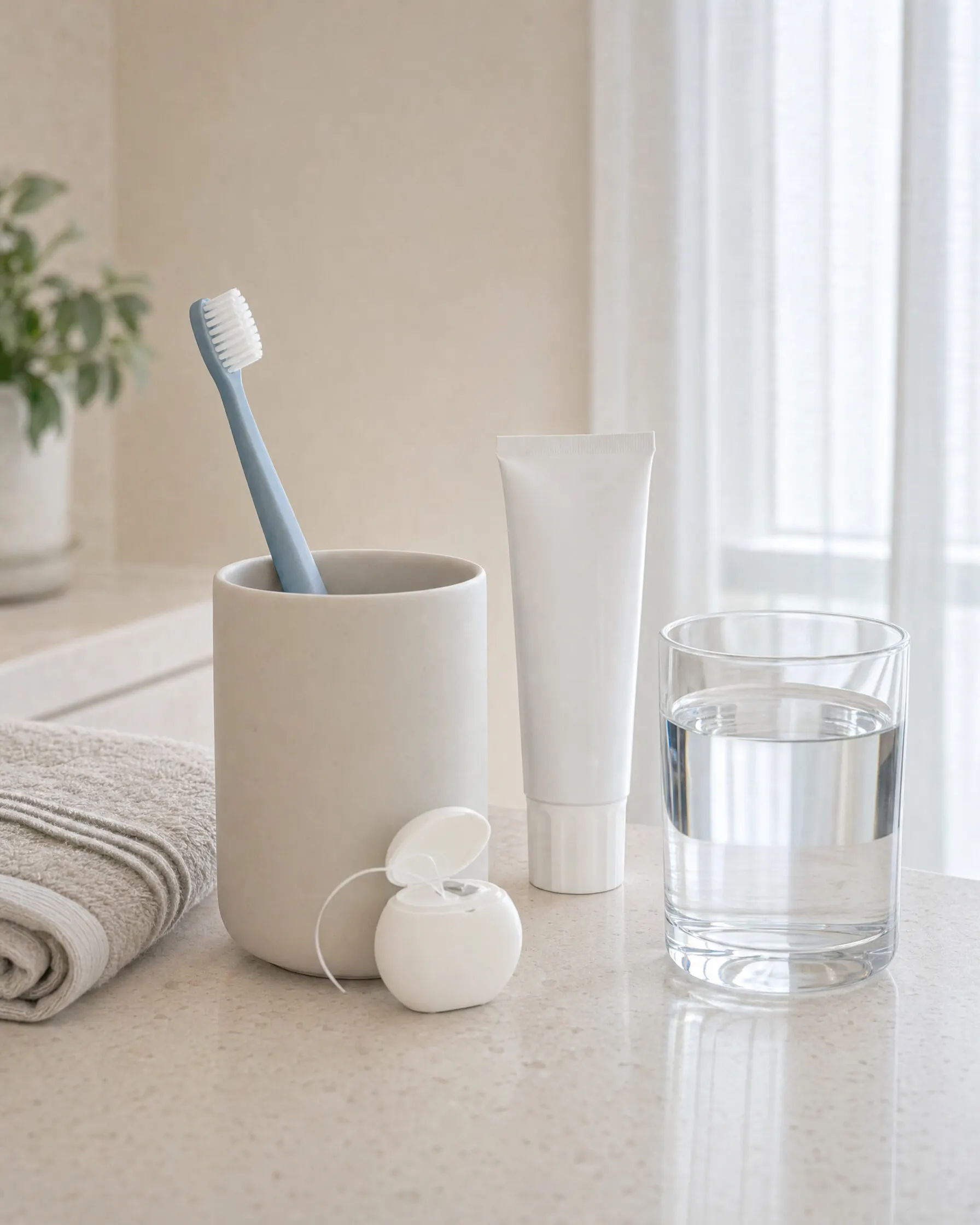
Toothbrush in a cup, dental floss, toothpaste and a glass of water on a bathroom counter (illustrative image)

Emergencies accommodated

Got a question? An emergency? Just call — the phone is the only way to reach us.

We can accommodate dental emergencies. Call us and we will do our best to see you quickly.